Two Shot Mold Manufacturer for Complex Multi-Material Parts
GBM designs and manufactures custom two-shot injection molds for products that combine two colors, two rigid plastics, or rigid and soft-touch materials in one molding cycle.
From early DFM review and material-interface evaluation to mold manufacturing, T1 validation and optional injection molding production, our team helps overseas customers reduce bonding, alignment, appearance and production risks before mass production.
- DFM review before mold design
- Support for export molds and molding production
- CMM inspection and trial validation
- Experience with complex 2K mold structures
Where Two-Shot Mold Projects Commonly Go Wrong
A two-shot part may look simple in a rendering, but small decisions involving material selection, interface geometry, sealing, rotation and cooling can determine whether the project reaches stable production.
Weak Material Bonding
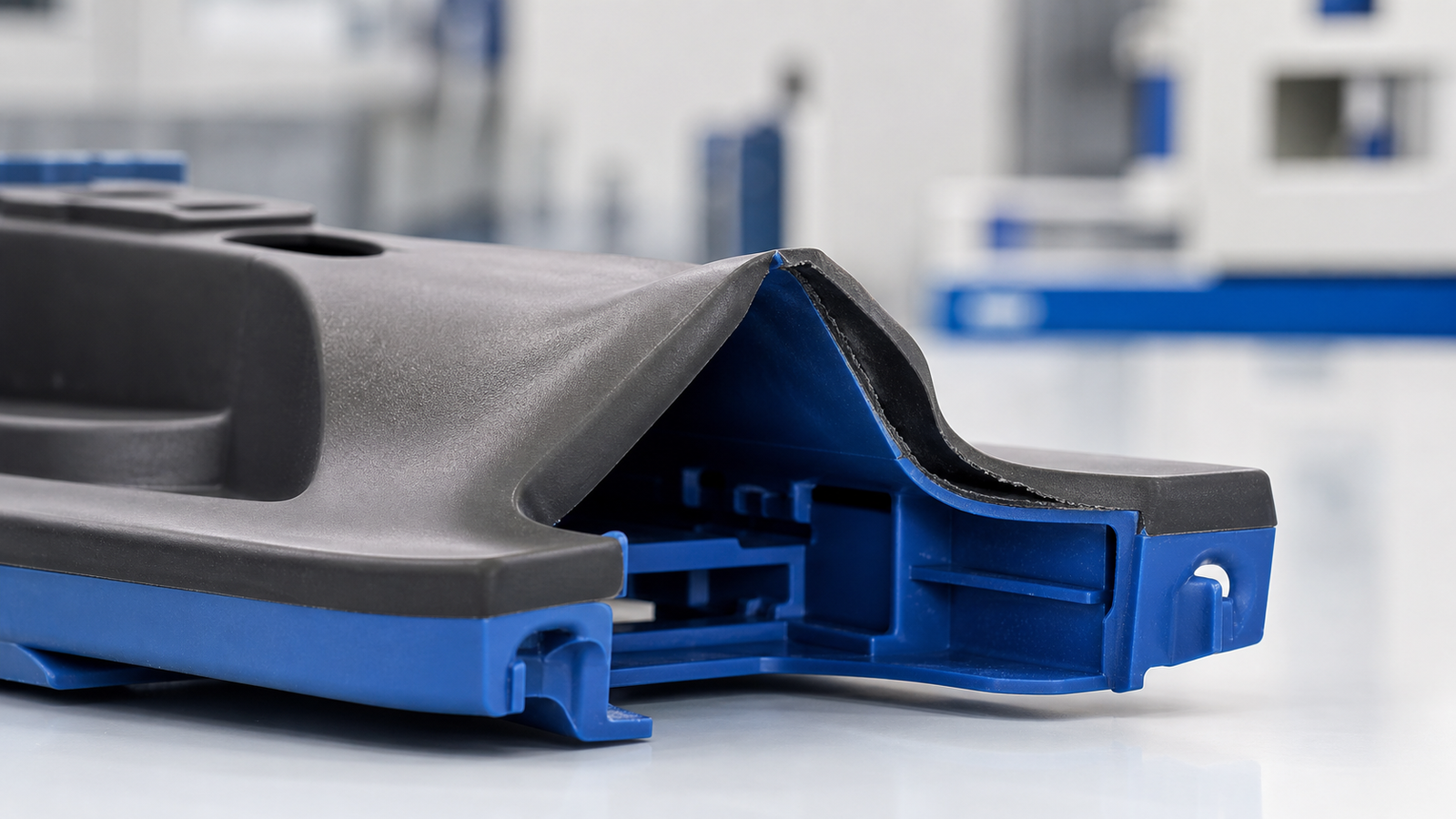
The second material may peel away when the selected grades are not chemically compatible or when the interface does not provide sufficient mechanical retention.
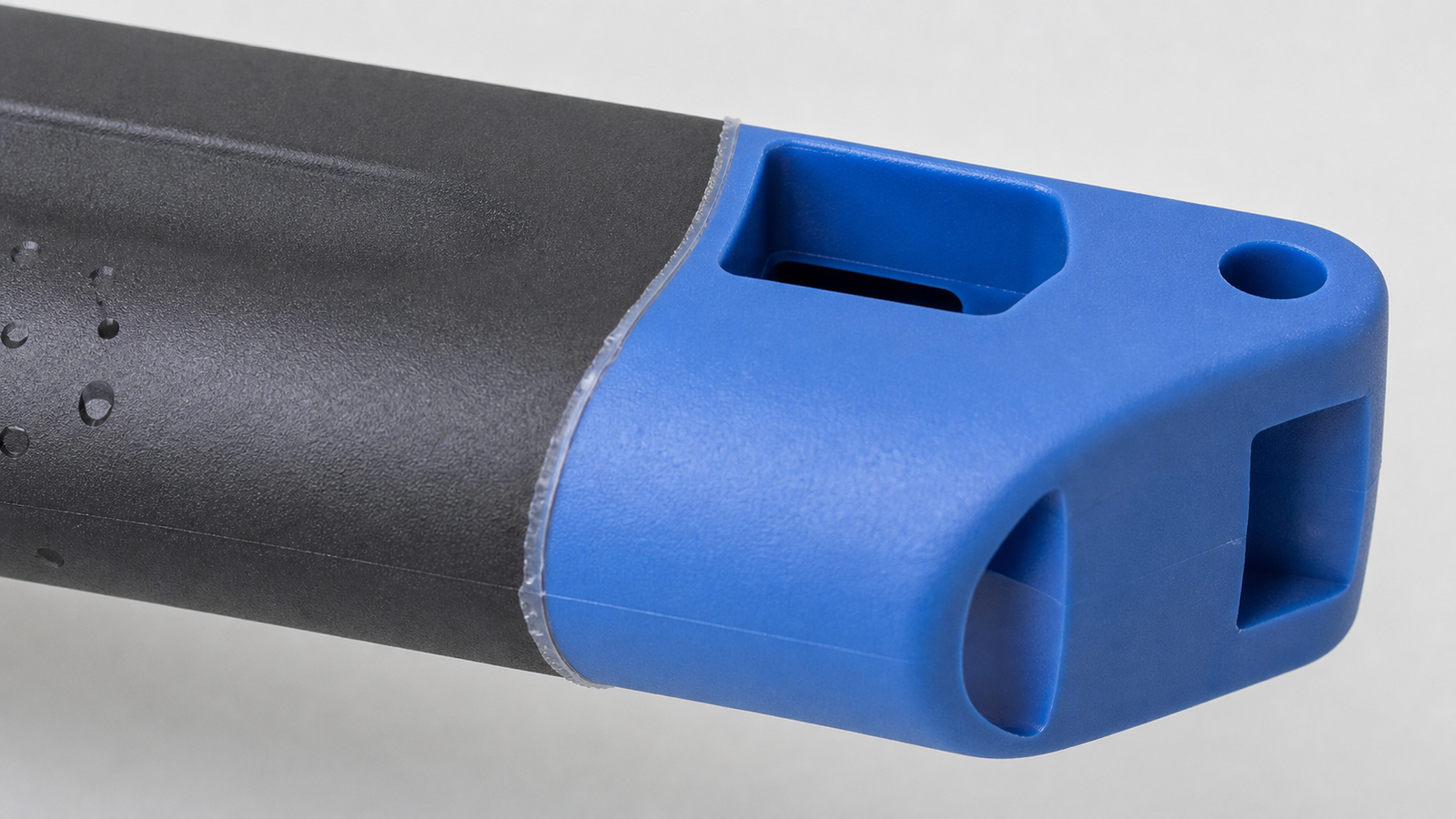
Flash at the Material Boundary
Insufficient shut-off design or unstable first-shot dimensions can allow the second material to overflow beyond the intended interface.
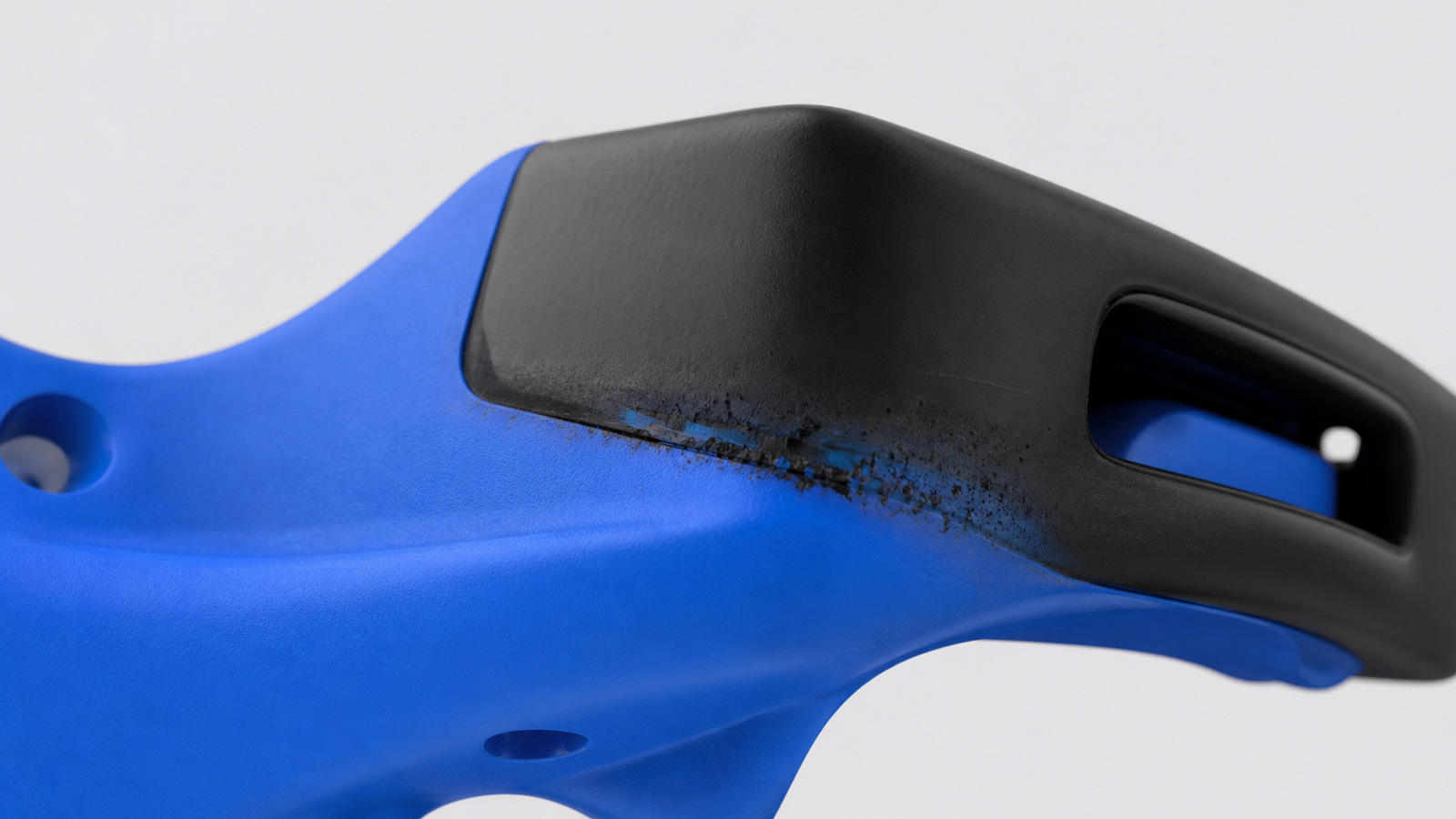
Color Bleeding or Contamination
Poor cavity sealing, material residue or uncontrolled processing conditions can affect the visual boundary between the two colors.
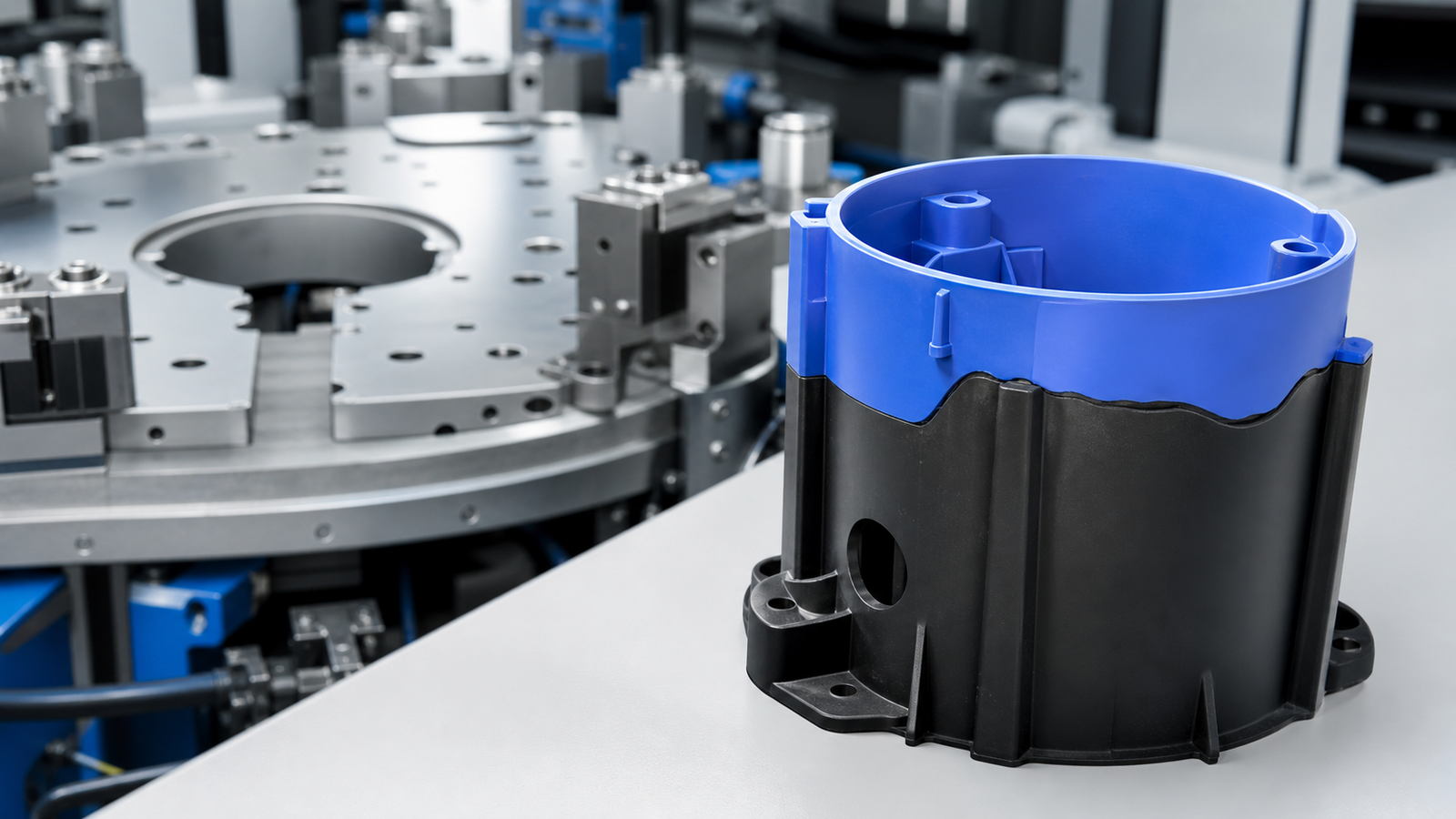
Rotation and Positioning Errors
Inaccurate rotation or transfer positioning can create mismatch, uneven wall thickness or damage to the first-shot component.
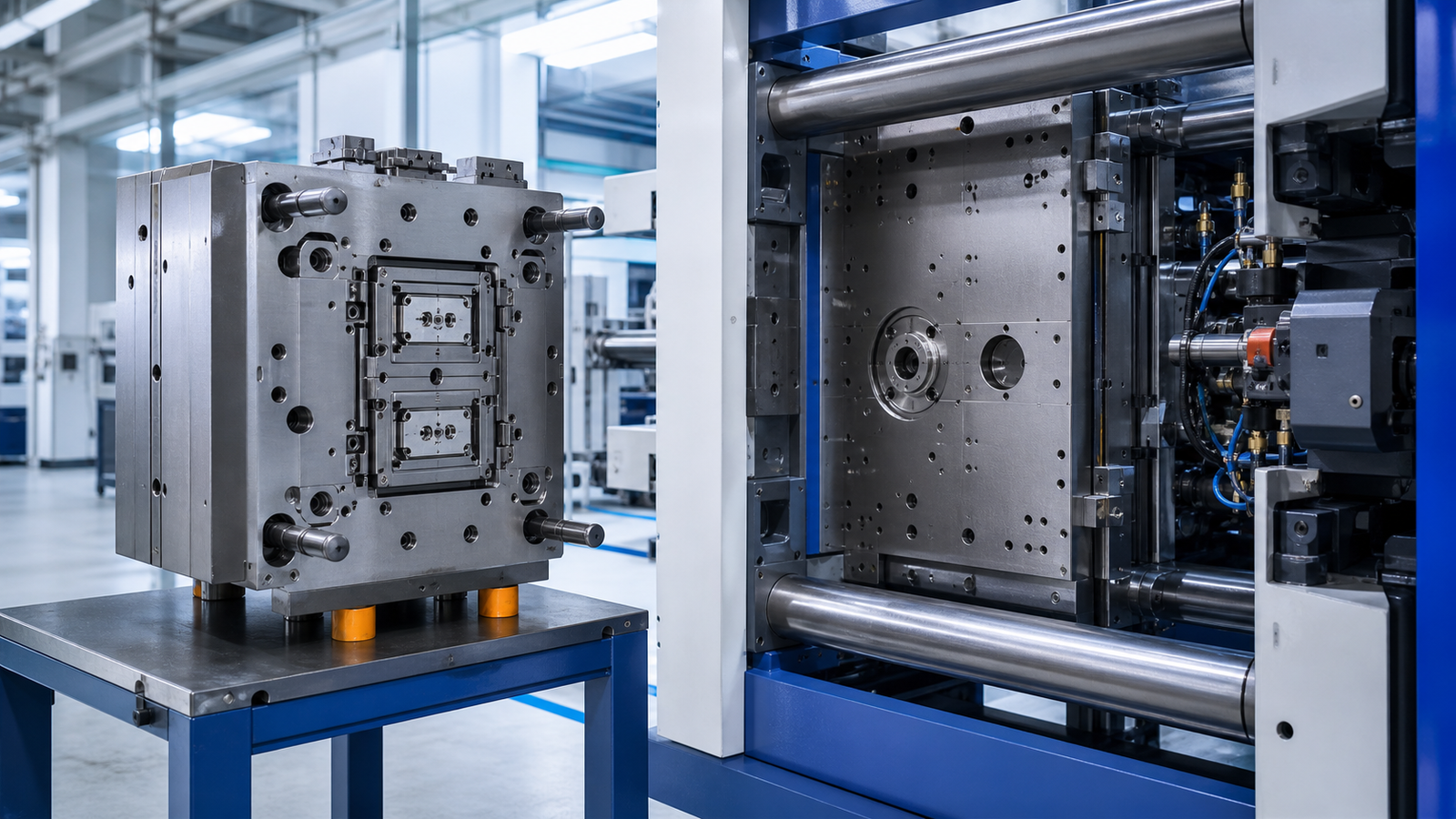
Warping After the Second Shot
Different material shrinkage rates, cooling conditions and second-shot pressure can distort the completed part.
Mold Doesn't Match Machine
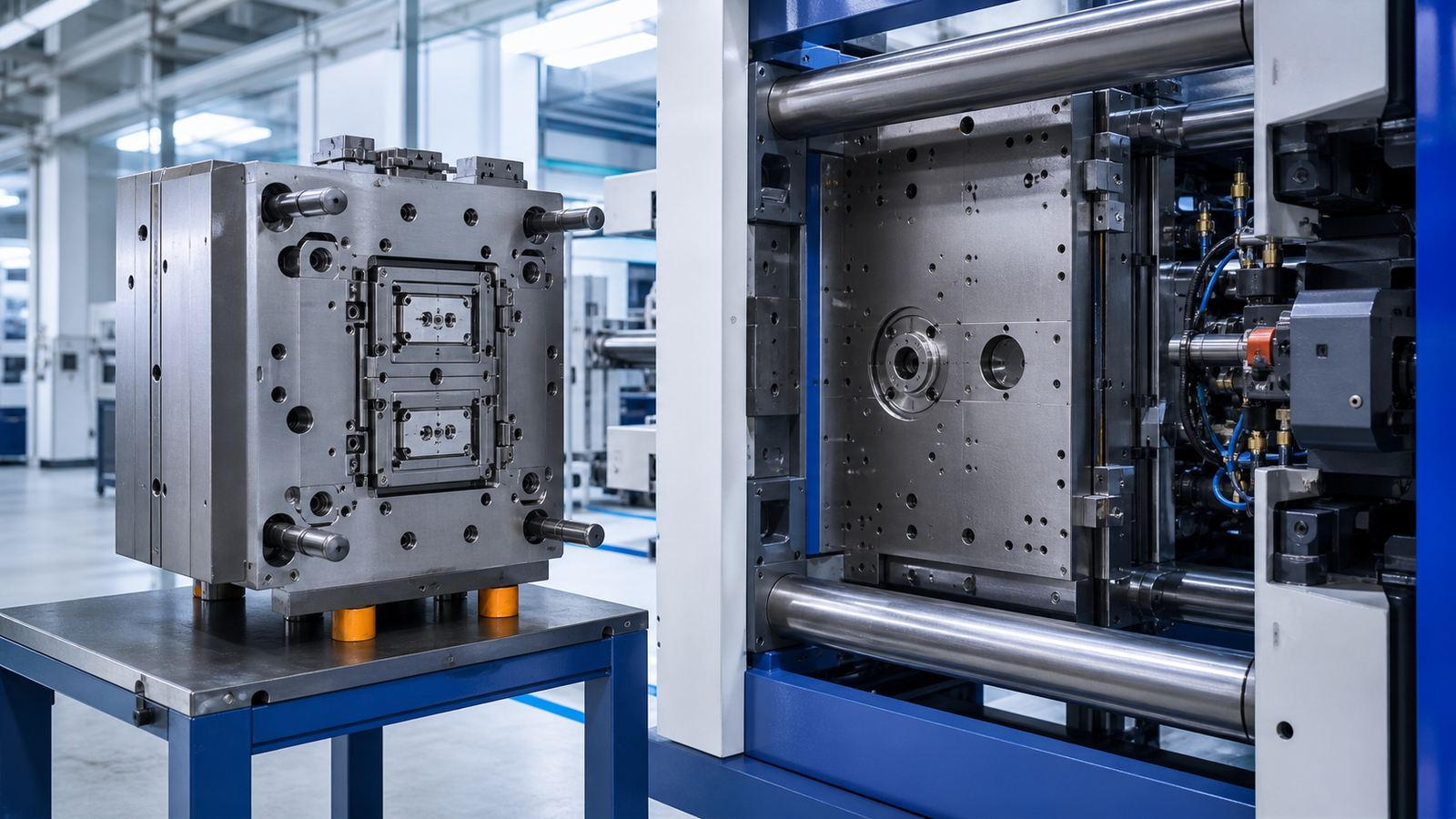
Platen size, tie-bar spacing, injection-unit orientation, nozzle position, rotary interface and machine control requirements must be reviewed before mold design.
What Is a Two-Shot Injection Mold?
A two-shot injection mold produces one finished plastic component through two coordinated injection stages.
The first material is injected to form the substrate. The substrate is then moved, rotated or transferred to a second molding position, where another color or material is injected.
The process can combine:
- Two different colors
- Two rigid thermoplastics
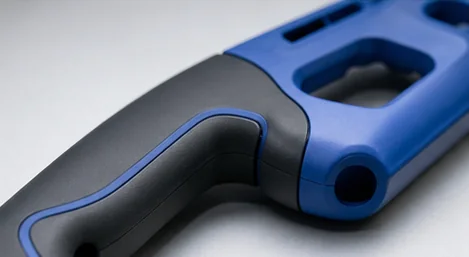
- A rigid substrate and soft-touch TPE or TPV
- Transparent and opaque sections
- Functional sealing, gripping or impact-absorbing areas
Compared with molding two separate components and assembling them afterward, a properly designed two-shot process can reduce assembly steps, improve part positioning and create a more integrated product.
Three Two-Shot Mold Concepts We Evaluate
The mold concept should follow the part geometry and production requirements—not the other way around.
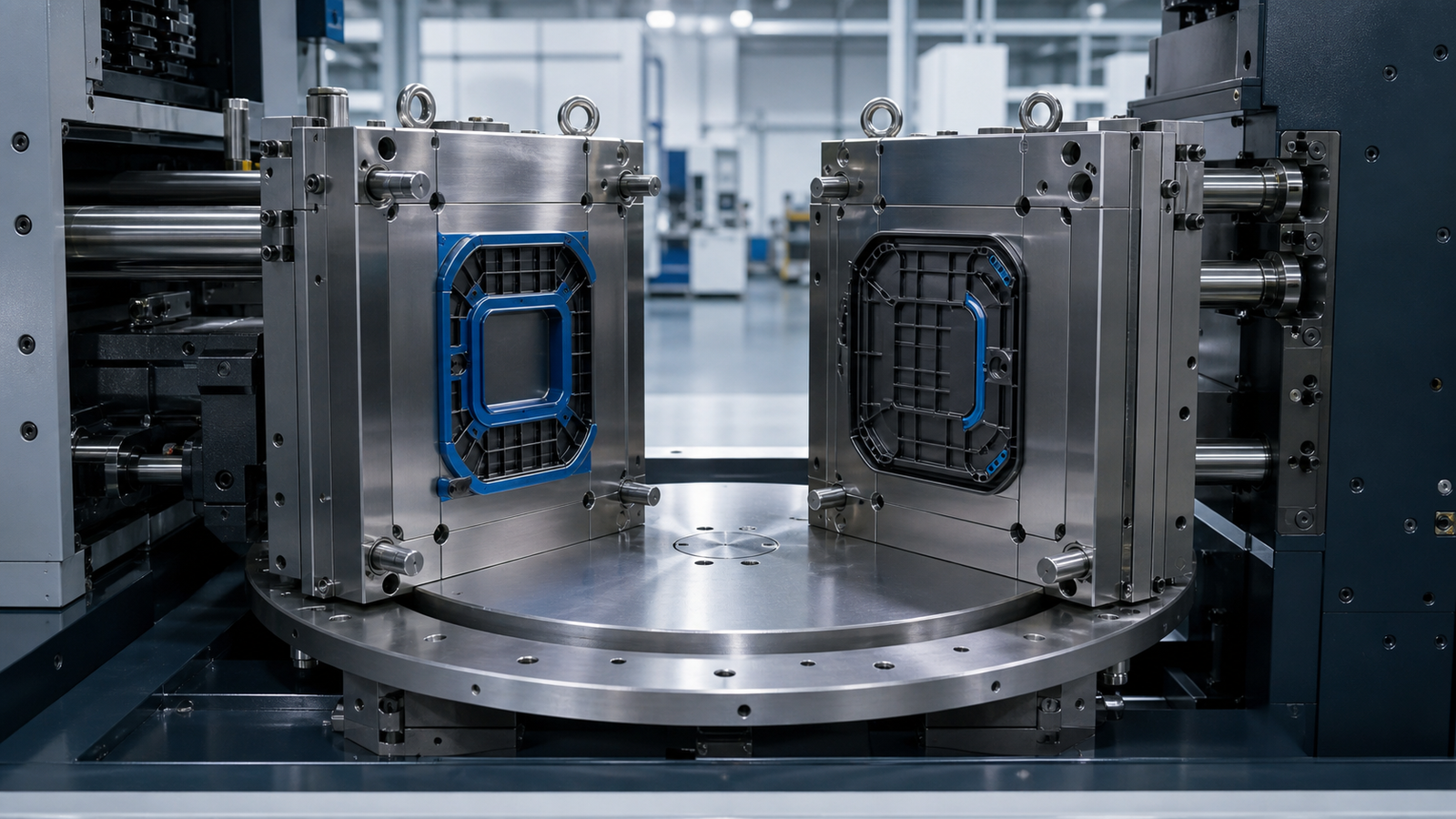
1. Rotating Platen / Rotary Table
After the first shot, the machine platen or mold half rotates to align the substrate with the second cavity.
Best Suited For:
- Products with repeatable cavity positioning
- High-volume automated production
- Parts with balanced first-shot and second-shot layouts
- Machines configured for rotary two-component molding
Engineering Focus:
- Rotation accuracy
- Cavity & cooling balance
- Machine and mold interface
- Reliable substrate retention during rotation
2. Rotating Core
The molded substrate remains on the rotating core while the core moves into the second-shot position.
Best Suited For:
- Parts that must remain accurately located on the core
- Products with internal geometry controlled by the core
- Applications where substrate movement must be minimized
Engineering Focus:
- Core rotation accuracy
- Sealing at the second-shot interface
- Core rigidity and cooling
- Ejection sequence
3. Transfer System
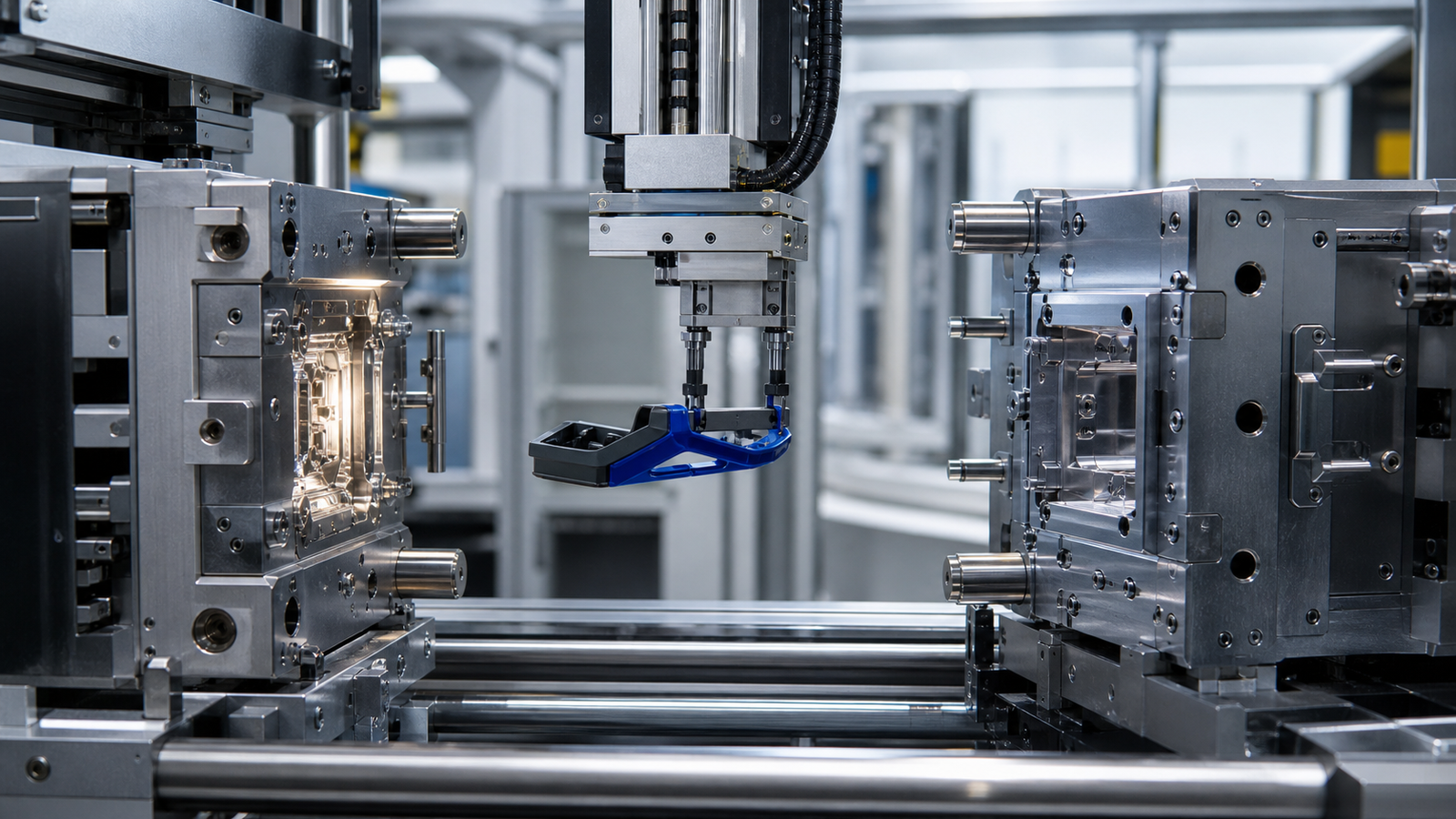
The first-shot component is transferred into another cavity by robot, mechanical transfer or another controlled handling method.
Best Suited For:
- Parts that cannot be indexed through a rotating mold structure
- Projects using separate molding positions
- Complex products requiring flexible orientation
- Existing equipment with limited rotary capability
Engineering Focus:
- Transfer repeatability
- Part deformation before the second shot
- Cycle time & automation
- Second-cavity positioning
GBM reviews the product geometry, materials, annual volume, target cycle time and available molding machine before recommending a tooling concept.
Ask About the Right Mold ConceptMaterial Compatibility Is Only the Starting Point
Successful two-shot molding depends on more than selecting a hard plastic and a soft material from a compatibility chart.
GBM evaluates:
- Exact resin grades
- Chemical bonding potential
- Melt-temperature relationship
- Processing-temperature window
- Material shrinkage
- Substrate surface condition
- Interface area
- Mechanical interlock
- Product loading direction
- Environmental requirements
Chemical Bonding and Mechanical Interlocking
When direct chemical bonding is uncertain, grooves, holes, undercuts, ribs or other mechanical-locking features may be introduced to improve retention.
These features must be designed carefully to avoid creating weak walls, trapped air or visible defects.
| First-Shot Material | Possible Second-Shot Material | Common Application | Engineering Notes |
|---|---|---|---|
| ABS | Selected TPE grades | Grips and housings | Grade-level bonding verification required |
| PC or PC/ABS | Selected TPE or TPU grades | Electronic and industrial housings | Review heat and chemical requirements |
| PP | Compatible TPV or TPE grades | Seals and consumer components | Chemical compatibility is grade dependent |
| Rigid plastic | Same-family rigid plastic | Two-color cosmetic parts | Review melt temperature and interface design |
Risk Warning: Material compatibility must be confirmed using the actual resin grades, product geometry and trial results. GBM does not recommend relying on generic material names alone.
Engineering Controls Before We Cut Steel
The most economical mold correction is the one identified before manufacturing begins.
Product and Requirement Review
We review the 3D drawing, part function, cosmetic surfaces, material requirements, annual volume and target molding location.
Two-Shot DFM Analysis
The DFM review evaluates:
- Material interface & shut-off areas
- Parting line & draft
- First-shot retention
- Second-shot pressure direction
- Gate positions & venting
- Cooling & ejection
- Potential deformation
Machine Compatibility Review
For export tooling, GBM confirms the customer's machine: clamping force, platen dimensions, tie-bar spacing, injection-unit layout, rotary direction and mold height limits.
Mold Concept and Design Review
Before mold manufacturing, the proposed structure, motion sequence, steel selection and critical tolerances are reviewed with the customer.
Trial and Optimization Plan
T1 testing is used to validate filling, material bonding, boundary quality, rotation, dimensions, appearance and cycle stability.
Built, Tested and Verified in One Manufacturing System
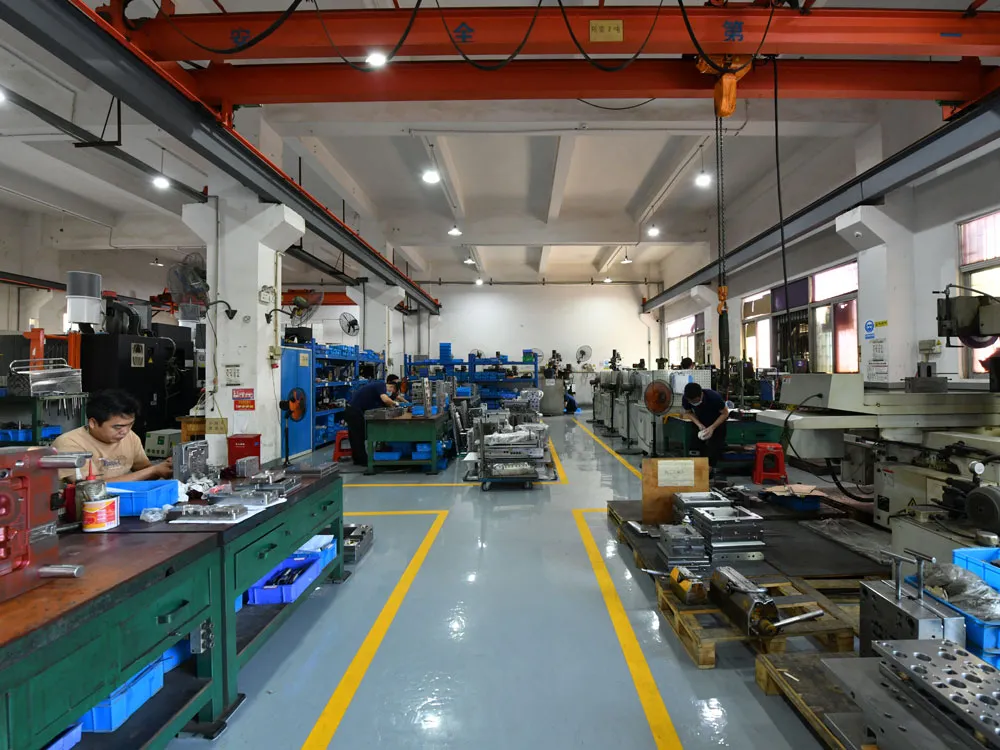
We execute precise precision injection mold manufacturing and rigorous testing under one roof.
Mold Manufacturing
Critical mold components are manufactured through planned CNC, EDM, grinding, fitting and assembly operations according to the approved mold design.
Two-Shot Trial Capability
Trial molding allows our team to evaluate the complete two-shot sequence rather than checking mold components separately.
Dimensional Inspection
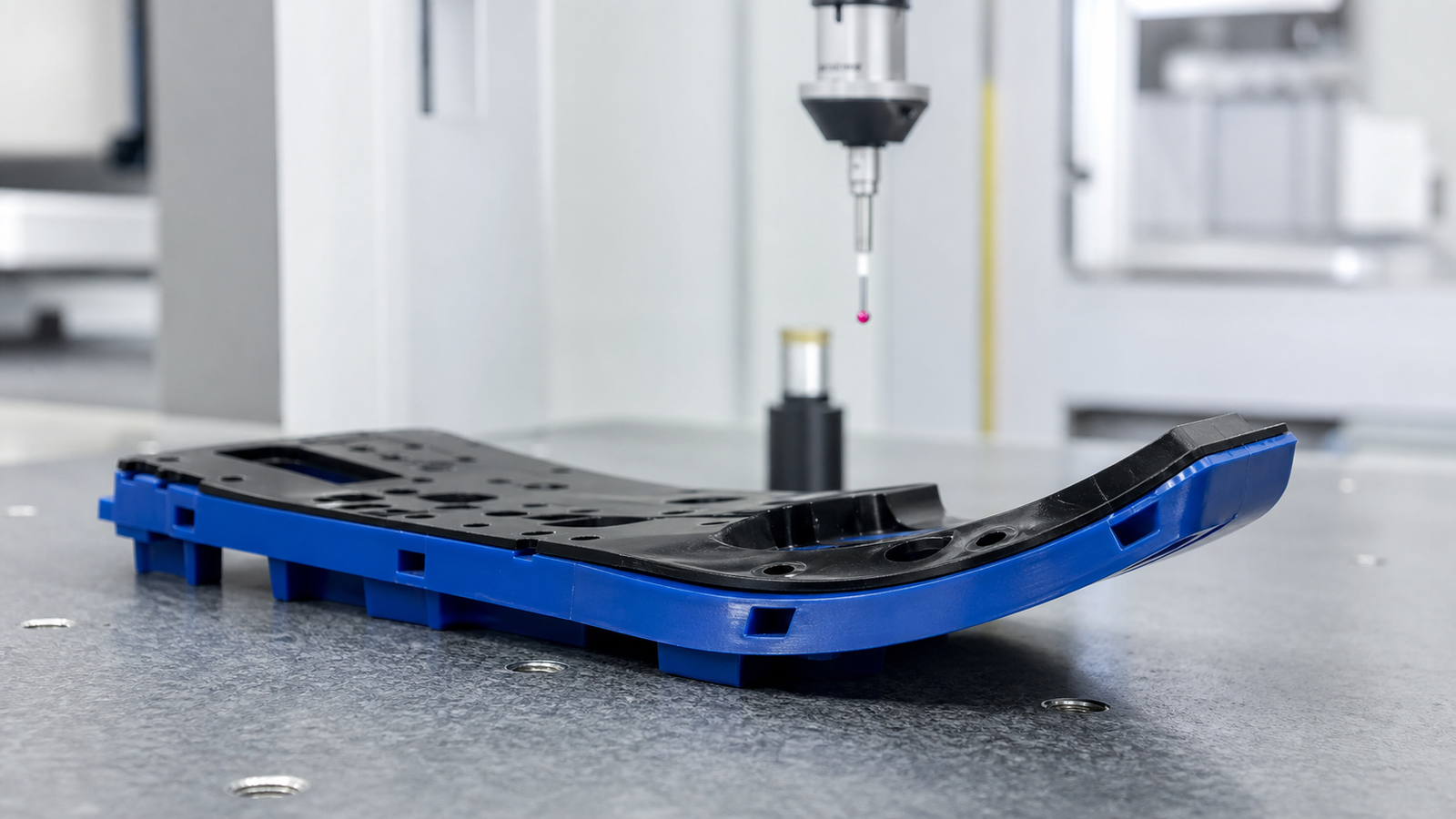
Critical dimensions and mold components can be verified through CMM and other appropriate inspection methods according to the approved drawing and project requirements.
Project Reporting
Customers receive documented updates at defined project stages, including design review, manufacturing progress, trial results and corrective actions where required.
Choose the Supply Model That Fits Your Production Plan
Option 1: Export Two-Shot Mold
Suitable for customers that operate their own injection molding facility.
GBM can support:
- DFM and mold design
- Customer-machine interface review
- Mold manufacturing & T1 validation
- Sample submission & mold documentation
- Spare parts and export packaging
Customer needs to provide:
3D/2D drawings, material grades, machine specifications, mold standard, annual volume, validation requirements.
Option 2: Mold + Injection Production
Suitable for brands, OEMs and assembly companies that want GBM to manufacture both the mold and molded components.
GBM can support:
- Two-shot mold manufacturing
- Trial and process development
- Injection molding production
- Dimensional inspection
- Packaging and delivery
Customer needs to provide:
Product drawings, material requirements, estimated order quantity, appearance standard, packaging requirements.
Two-Shot Mold Applications
Automotive Components
- Soft-touch controls
- Sealing components
- Functional interior parts
- Two-color operating elements
Industrial Products
- Protective housings
- Sealed interfaces
- Grips
- Control components
Medical & Healthcare
- Functional grips
- Sealing areas
- Multi-material housings
- Controlled interfaces
Consumer Products
- Handles
- Baby-product components
- Personal-care products
- Cosmetic two-color parts
Electronics
- Buttons
- Sealed housings
- Connector-related components
- Rigid-soft interfaces
What to Check Before Selecting a Two-Shot Mold Manufacturer
Ensure your supplier can confirm the following before you issue a PO:
- Review actual material grades rather than generic names
- Explain the proposed mold indexing concept
- Check mold compatibility with the target machine
- Provide a two-shot-specific DFM report
- Identify the second-shot pressure direction
- Control the boundary between both materials
- Validate bonding and deformation during trial molding
- Measure critical dimensions
- Provide mold documentation for export
- Support mold modification after T1
- Show real two-shot molds and trial capability
A supplier should be able to explain why a particular mold concept is suitable for your part—not simply confirm that the project can be made.
From RFQ to Validated Two-Shot Mold
What We Need to Evaluate Your Project
Providing the following information helps GBM assess feasibility, tooling concept, quotation and delivery schedule more accurately.
Tip: If the second material has not been selected, provide the product function, hardness target, operating temperature, chemical exposure and bonding requirement.
- 3D product drawing
- 2D drawing with critical tolerances
- First-shot material and grade
- Second-shot material and grade
- Annual volume
- Expected mold life
- Target molding machine
- Number of cavities
- Surface and appearance requirements
- Color requirements
- Export mold or molding production
- Target project schedule
- Existing samples or previous mold issues
Two-Shot Mold FAQs
What is the difference between two-shot molding and overmolding?
How do I know whether two materials will bond?
What causes flash between the two materials?
Which two-shot mold structure should I use?
Can GBM build a two-shot mold for our existing machine?
Can GBM export the mold to our factory?
Can GBM manufacture the molded parts?
What files are required for a quotation?
How long does a two-shot mold take to build?
How much does a two-shot mold cost?
Need a Two-Shot Mold That Can Reach Stable Production?
Send GBM your 3D drawing, material requirements, annual volume and target molding-machine information.
Our team will review the product structure, material interface, mold concept and major project risks before preparing a tooling proposal.
Email Us
info@gbmmould.com
Call Us
86-13632611848
Location
3rd Building, 2nd Industrial Community, Gonghe, Shajing, Bao'an District, SZ, CN