Engineering Complex Molds for Reliable Production
Since 2006, GBM has manufactured precision injection molds for plastic parts involving two materials, metal inserts, internal threads, fine-pitch connectors and complex ejection structures.
Customers can purchase an export mold for their own molding facility or continue with trial, injection molding, inspection and assembly at GBM.
A 3D part file, plastic material and annual volume are usually enough for an initial project review.
A Mold Manufacturer Built Around Complex Production Requirements
GBM Mold Technology Co., Ltd. is a Shenzhen-based injection mold and molding manufacturer. The company works with overseas injection molders, industrial manufacturers and product companies that need more than a finished mold base.
Many projects handled by GBM involve multiple sliders, precision terminals, internal or external threads, two-material structures, high glass-fiber content or dimensions that must remain controlled after the mold moves into production.
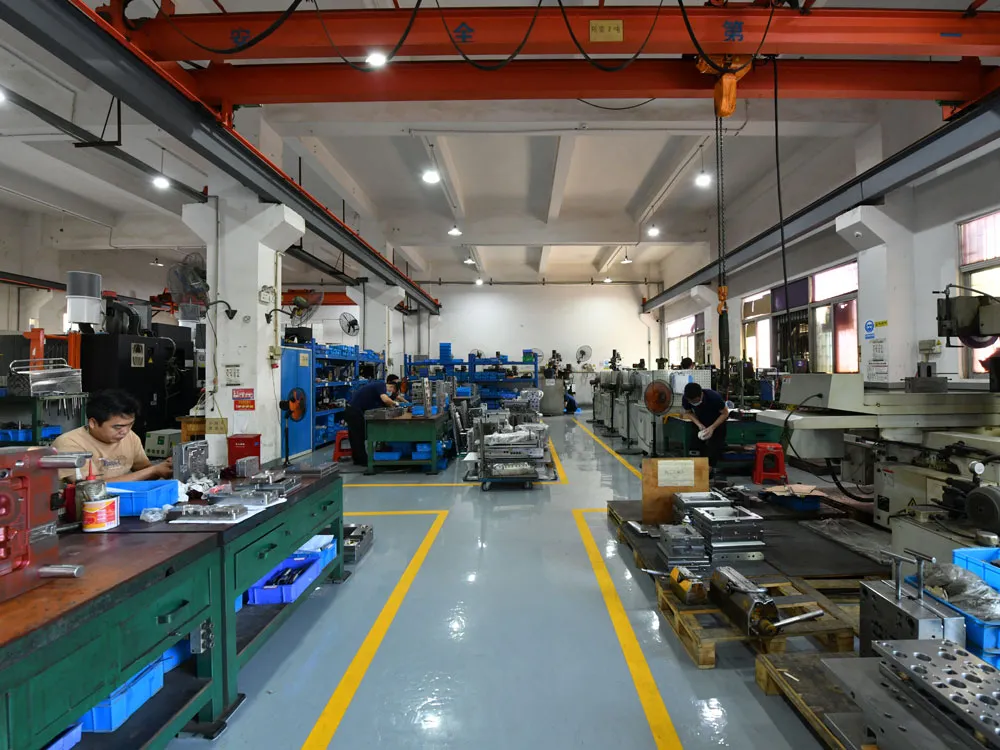
Engineering, mold manufacturing, component inspection, fitting, trial and injection molding remain connected within the same project process. This allows a decision made during DFM to be checked again during machining, mold assembly and T1 trial.
2006 — Mold Engineering and International Projects
In-House Mold Manufacturing
Injection Molding and Production Validation
2026 — Expanded Factory and Production Capacity
Where Complex Mold Projects Usually Go Wrong
The cost of a mold problem is rarely limited to the mold itself. It may also affect sample approval, machine scheduling, assembly, product launch and long-term maintenance.
Repeated Mold Revisions
The product launch date is fixed, but the part structure still carries risks related to wall thickness, release angles, or assembly interference.
The part is reviewed for draft, wall thickness, undercuts, gate position, ejection and critical dimensions before the mold structure is released.
Actual Benefit: Risks can be discussed before steel cutting instead of becoming repeated mold changes after T1.
Unstable Dimensions after T1
The first batch of samples can be assembled, but dimensions drift during subsequent trials or mass production.
Critical cores, cavities and inserts are measured before assembly, while molded samples are compared with the approved 2D drawing and critical tolerance list.
Actual Benefit: Dimension changes can be traced to tooling, material or molding conditions before the mold enters mass production.
Export Mold Machine Compatibility
The mold is scheduled for export to the US, UK, Germany, or another customer facility, risking installation mismatches.
Before design approval, the team confirms platen size, tie-bar spacing, locating ring, nozzle radius, ejector connection, water fittings, electrical connectors and hot runner controls.
Actual Benefit: The mold is designed around both the part and the customer’s molding machine, reducing installation changes after delivery.
Difficult Mold Maintenance
Overseas customers cannot frequently ship the mold back to China for routine maintenance or repair.
Wear components, insert replacement, access space and spare-part drawings are considered during mold design and final delivery preparation.
Actual Benefit: The customer’s maintenance team can replace critical components without rebuilding major mold sections.
Production Instability
The mold passes initial trial, but continuous production reveals flash, sticking, ejection issues, or cycle time fluctuations.
The mold is evaluated through trial and, when required, actual production runs to review cooling, ejection, part release, material bonding and process repeatability.
Actual Benefit: Production risks are reviewed before the customer schedules the mold into regular manufacturing.
Engineering Decisions Stay Connected from Drawing Review to Production
The benefit of an integrated supplier is not the number of services listed. It is the ability to keep the original engineering requirement connected through every manufacturing stage.
DFM and Mold Engineering
Part geometry, material, tolerance, annual volume, mold life and the customer’s machine specification are reviewed together before the tooling approach is confirmed.
CNC, EDM & Inspection
Cores, cavities, sliders and inserts are machined according to the approved mold design. Critical dimensions are checked before components are released for fitting.
Mold Fitting & Movement
Slides, lifters, unscrewing mechanisms, inserts, ejection and water circuits are checked during assembly instead of waiting for the first molding trial.
Mold Trial & Approval
T1 samples, molding parameters, trial pictures and open issues are recorded so that engineering changes can be linked to a visible trial result.
Injection Molding & Assembly
Customers may stop after export mold approval or continue with low-volume molding, mass production, printing, welding and product assembly.
The Most Valuable Mold Correction Happens Before Steel Cutting
A mold design cannot be based only on the visible part shape. Material shrinkage, draft, undercuts, insert loading, thread release, cooling, machine configuration and maintenance access must be evaluated as one system.
See How We Review a Mold ProjectTwo-Shot Part
When a rigid PC/ABS housing includes a TPE sealing area, the team must review the second-shot shut-off, first-shot deformation, material bonding and the customer’s two-shot machine configuration before selecting a rotary platen, rotary core, core-back or transfer method.
Insert-Molded Connector
For a connector with multiple terminals, the locating structure must hold each insert against injection pressure without damaging the plated surface or reducing the required electrical spacing.
Threaded PEEK Part
For a PEEK fitting with internal and external threads, thread pitch, release direction, mold temperature, heating layout and unscrewing space must be considered together.
A Mold Is Complete Only When It Can Run in Production
Mold Manufacturing
Precision machining is only one part of the work. The mold must also be fitted, moved, cooled, ejected and maintained under real production conditions.
Mold Trial
During T1, the team reviews mold movement, filling, venting, cooling, ejection and sample condition. Open issues are recorded together with the required action and next verification point.
Two-Shot, Insert and Overmolding Production
Two-material transfer, insert positioning, material bonding and shut-off conditions can be checked through the actual molding process rather than only through mold-bench movement.
Production and Assembly
Customers can use GBM as an export mold supplier or continue with molded parts, secondary operations and assembly according to their supply-chain model.
Quality Data and Project Progress Should Be Visible
No vague "the mold is in progress" updates. Customers see what has been completed, what remains open and what happens next.
Quality Control
Incoming Inspection
Mold steel hardness, mold bases and critical purchased components are checked against the approved project specification before machining begins.
Component Inspection
Critical cores, cavities, sliders and inserts are measured before assembly so that dimensional deviations are not hidden inside a completed mold.
Trial Sample Inspection
Molded samples can be checked against the 2D drawing, critical dimensions, appearance requirements, fit and function.
Final Mold Inspection
Water circuits, mold movement, ejection, components, accessories and final mold condition are reviewed before export packaging.
Available Documentation
- Material Certificates
- Steel Hardness Records
- Component Inspection
- Full CMM Report
- FAI Report
- Cpk Study upon Request
- Mold Trial Parameters
- Final Inspection Records
Project Transparency
Weekly Progress Report
The report shows planned progress, actual progress, completed machining, current inspection status and the next customer approval required.
Manufacturing Pictures
Overseas customers can see which mold components have completed CNC, EDM, fitting or inspection.
Trial Pictures and Videos
Mold movement and sample condition can be reviewed before physical samples arrive.
Open Issue Tracking
Each issue remains linked to a responsible action, target date and verification result until closure.
Complex Projects Explain Our Capabilities Better Than General Claims
High-Insert-Count Fuse Block Mold
The project included more than 1,400 precision inserts and fragile profiles that had previously caused frequent component damage and maintenance work. GBM revised the insert and mold structure, then checked critical areas through component measurement and T1 trial. The new mold received sample approval after the first trial and addressed the previous maintenance issue.
5.5-Ton Two-Shot Mold
A large automotive component required two materials, hydraulic lifters and a hot runner system. Mold movement, material transfer, second-shot shut-off and machine configuration had to be considered within the same design. GBM manufactured a two-shot mold weighing approximately 5.5 tons for the production requirement.
Internal & External Thread PEEK Part
The component combined internal and external threads with a high-temperature PEEK molding requirement. GBM developed an automatic unscrewing structure and evaluated the heating layout, thread release and available mold space before trial.
Stack Mold Project
The customer needed higher output without using a substantially larger molding machine. GBM developed a stack mold and completed the project from design to shipment in approximately nine weeks.
Supported Industries
Automotive
Complex structural parts, two-shot components and functional modules requiring strict dimensional stability.
Electrical Connectors
Fine-pitch housings, multi-pin components and insert-molded parts where terminal position and flash are critical.
Medical Devices
Precision housings, fluid control components and overmolded parts requiring clean molding execution.
Industrial Equipment
Durable components molded from high-performance engineering plastics like PEEK, PEI and PPS.
The People Responsible for the Drawing Stay Connected to the Result
A complex mold is not completed by one department. Engineering, machining, fitting, quality, molding and project management must work from the same approved requirements.
Engineering Team
Reviews part feasibility, mold structure, material behavior, machine compatibility and production risk.
Mold Manufacturing
Converts the approved design into measured cores, cavities, sliders, inserts and assembled mold movements.
Quality Team
Checks incoming material, critical mold components, trial samples and final mold condition.
Molding Team
Evaluates filling, cooling, ejection, material bonding and process repeatability through trial and production.
Project Management
Connects customer approvals, engineering changes, manufacturing progress, trial results and delivery information.
GBM supports overseas injection molders, industrial manufacturers and product companies that require export molds or mold-and-production supply. Customer references may be available upon request when authorization allows.
Have a Complex Plastic Part or Mold Project?
Upload the 3D part file together with the plastic material, annual volume, critical tolerances and target production location. The engineering team will review the part structure and suitable tooling approach before the project moves forward.
- Confidential Project Review
- Engineering Feedback
- Export Mold or Mold + Production
- Support from Drawing Review to Delivery
Direct Contact:
Email: info@gbmmould.com
Phone: 86-13632611848